China was once a destination for low grade scrap where cheap labor was used to extract the valuable fractions. This is increasingly no longer true.
Some time ago, China instituted its “Green Fence” policy. They started to inspect imported scrap loads with greater frequency and intensity, looking for loads that might be garbage disguised as scrap. They were looking for loads of mixed plastics and scrap metal with a lot of tramp material. Rejected loads were sent back to their origin at the shipper’s expense. A lot of US-based brokers who exported to China simply stopped buying.
Fast forward. China – in an effort to clean up it’s environment and be in good standing with the World Trade Organization (WTO) of which it is now a member – has instituted a new policy called “National Sword”. This new policy has raised standards for purity, allowing no more than one percent contamination for many commodities such as plastic, cardboard, and many grades of scrap metal. In a word, China no longer has an insatiable appetite for low grade scrap. While still in the market for higher grades, China is no longer the dominant destination for scrap that it once was.
Some of this material will be diverted to other developing countries and the rest will stay here. The good news is that increased domestic processing capacity will be put on line to take advantage of this new opportunity to extract the valuable parts of “dirty scrap”. In the short term, domestic scrap sellers will be left with weaker markets for their products. Taking a longer view, those that invest in new machinery and technology will have new value-added opportunities, and those that supply them will have better domestic markets.
In terms of producing war materiel, providing jobs, as well as putting added value back into our G.D.P., we should take a hard look at trying to do the same for our domestic manufacturing sector. Nothing illustrates this more than the current panic over the difficulties of exporting raw materials to buy them back for more money as finished goods, while trying to figure out how to create good jobs for Americans. We should have never been in a situation of being overly-dependent on exporting our resources due to a lack of a need for them at home.
The conclusion: We need to clean up our act, and responsibly recycle our own scrap. At the end of the day, China may have done us a favor.
Because scrap metal is easily converted to cash, unfortunately it’s a target for theft. Although stolen material represents about one percent or less of all purchases, it’s still a serious problem.
Through collaboration with the scrap metal industry, North Carolina has enacted state saws to help curtail the problem. These laws help to easily identify thieves of scrap metal and prosecute them.
Here are measures we take to ensure that stolen materials don’t end up at our yard:
We always record the license plate number of the vehicle of anyone who sells us scrap. We won’t buy scrap unless the customer is in a vehicle with a license plate.
All people who sell us scrap will have their driver’s license or identification card scanned and will provide us with an electronic fingerprint.
All transactions are recorded on digital video and still shots are taken of all scrap that we buy.
Records of all transactions are downloaded weekly to the sheriff’s department.
Before we purchase any scrap vehicle, we check the Vehicle Identification Number (VIN) with the North Carolina D.M.V. to see if it’s been reported stolen.
After purchasing junk vehicles, we download the VIN to MVTIS within 72 hours so that it’s public knowledge who bought the vehicle and when.
We only buy air conditioner coils from air conditioner contractors and demolition companies.
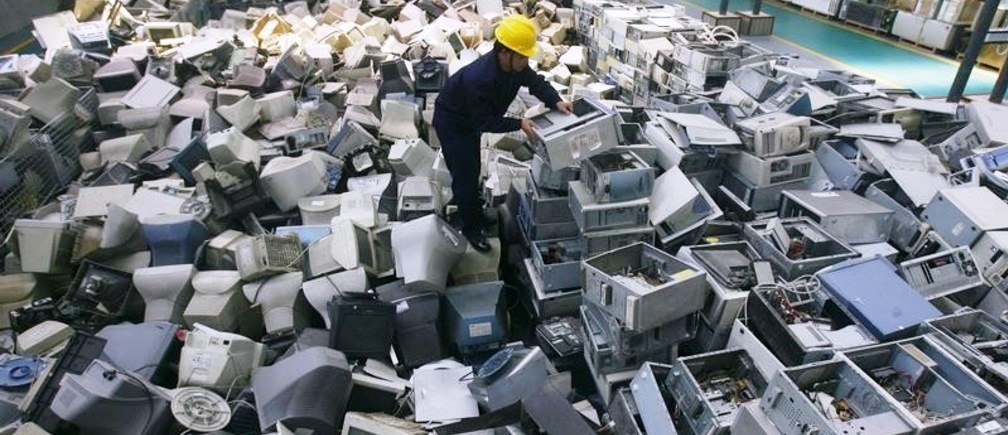 China was once a destination for low grade scrap where cheap labor was used to extract the valuable fractions. This is increasingly no longer true.
 Because scrap metal is easily converted to cash, unfortunately it’s a target for theft. Although stolen material represents about one percent or less of all purchases, it’s still a serious problem.